
I wrote this as a favour to a friend of mine who has recently been hired as a Bear Baiter in Eastern Canada, Hope you find it interesting.
REMEMBER TO CHECK ALL PROVINCIAL AND STATE LAWS BEFORE BAITING ANY ANIMAL FOR THE PURPOSE OF HUNTING.
Bear Baiting 101. By. Troy Ronald 2008.

First off you will need a gun. A lot of guys will tell you you need a rifle, I am telling you 100% positive to get a shotgun. I used a winchester model 1300 defender pump in 12ga for awhile and loved it. My last season baiting I upgraded to a stoger/iga coach gun double barrel also in 12ga. The benefits of using a shotgun over a rifle are simple. Using the proper ammo in 12ga (I wont use anything but 000Buck) gives you much greater "power on target" and aiming and shot placement are not nearly as important using buckshot as it is with a rifle. My 12ga 000Buck 3 inch rounds deliver 12 .36 calibre lead balls on target, spread over about a 15 inch circle at 20 yards. This is in comparison with say a 30-30 rifle, which fires one .30 calibre bullet at a time. Basically using a shotgun as a defence weapon makes more sense because in that time of distress you cannot assume you will be able to aim a rifle. Also, 000Buck rounds deliver 12x the knockdown power of your typical rifle at close range and most shotgun models offer faster follow-up shots than rifles. There is no doubt that at longer ranges a rifle is a much more effective hunting weapon, but in bear baiting situations using a shotgun at close range for protection is a no brainer. You are not fair chase hunting and you should not worry about anything but saving your own ass.
Selecting your bait areas and building them from there are key for success. Most outfitters will run between 10 and 100 bait sites depending on the size of their territory, and client demand. The list of needed supplies is short, but important. You will need a one litre spray bottle, two large buckets with handles, a half barrel and sheet of wood for a lid(to keep rodents and birds off your bait) for each bait, and either the makings of a ground blind or tree stand for each bait. It is important to familiarize your hunter with the size of the bait bucket to avoid seeing a tiny bear shot, this is unpleasant for both the client and guide. Another optional step to help avoid the harvest of a tiny bear is to place fine raked sand around each bucket in the pre baiting season. This allows the guide to judge the bears hitting the bait before the hunting season arrives and gives you the opportunity to avoid putting novice hunters on baits being hit by small bears(measure horizontally the width of the front foot large pad in inches and add 1.5 A front pad foot measurement of 5 inches across would come from a 6.5ftsq bear). Sprinkle a 5-8cm layer of fine sand in a four foot circle around the bucket and rake out the tracks each time you replenish the bait.
I have found that spacing your baits a minimum distance of 2kms apart works well and helps to avoid the same bear hitting more than one bait(although this cannot be avoided). Baits generally do not need to be very far from logging/dirt roads as Black bears are generally comfortable and used to the noises and smells of these roads. The biggest Black bear I have heard of taken at a bait site was a mere 50 meters from a very high traffic logging road.
Once you have selected a fairly open, properly spaced area hopefully with bear sign close by, you need to work on the site. I try to keep the bait bucket to the east, and the blind/tree stand to the west. As we all know the sun rises in the east and sets in the west and this affords your hunter to take advantage of the bears poor eyesight by putting the bright sun directly behind you at sunset the most advantageous time to hunt over a bait). Also this removes any chance of the hunter being "scope-lit" by the blinding setting sun while he is honed in on the bear. Some feel that having the bait only 20 meters from the blind/tree stand is too close, personally I feel it does not matter much. I like the up close and personal hunts and my hunters don't complain. The ones who can sit still that is...
Hopefully your outfitter has locally networked and made contact with both a butcher shop and a doughnut shop. These are key bait materials and will form the base of your baiting supplies. I have had much success with using fresh but frozen for storage butcher scraps. Mainly these scraps have consisted of the skin, bones, skulls, and other various parts of sheep, cattle, goat and pig. Freezing is important for long term storage as I have found many bears will not feed on rancid meat. These parts should be placed in the bottom of your barrel and will act as the "anchor", keeping bears there to feed for longer periods of time. The day-old doughnuts will act as a secondary attractant and should be strewn around the bait site sporadically which will attract other small animals and birds whose feeding will inadvertently attract bears. Although your anchor and secondary attractant are very important, the single most important bait item is the aggressive attractant. I decided on the term aggressive attractant because this bait item is the one that will travel the furthest through the air and aggressively seek out a bears nose like nothing else. You will need a spray bottle, a good supply of vanilla extract and a case of Dr.Pepper soda. I make a 50/50 mixture of the two items and generously spray the concoction on the bait, as high up on the surrounding trees as you can reach and even spray a little on my boots to create a scent trail walking in and out of the bait(remember to stay clear of the tree stand/ground blind when making a scent trail). The more you spray this mixture the better. Sometimes you will get lucky and a bear will mark one of the sprayed trees with its claws, this is always a bonus and your clients will love it. One way to make the bears work for you is to use either honey, molasses or some sort of syrup at the bait site. Pour all over the ground surrounding the bait site and as bears come in and out of the bait area they will cover their paws with the sticky liquids. Upon leaving the bait they will lay down for you the best scent trail possible.
Once you have your bait sites all taken care of and have stocked up on all the needed supplies for baiting it is time to set your baits. Generally it is best to start baiting one month before your first hunter arrives. I have found that it isn't worthwhile to bait the sites every day, every two or three days is plenty for this early season baiting. One week before your hunters arrive in camp begin baiting the sites daily.
Now you have active bait sites, bears are coming in to the bait. You have ruled out the possibility of mothers with cubs and small bears hitting the baits by checking their tracks in the sand and the hunters are in camp. In my mind the best way to set up your hunter at is to bring along your bait with the hunter and have them slip into the blind/ tree stand while you reset the bait. It is common for the bears in the area to get very used to you coming in and out of the bait and seeing/hearing/smelling you come in will act as a "dinner bell" for them. Most bears shot from bait sites are taken within a half hour after the baiter leaves the site. It is imperative that you and your hunter do not speak at all and that the hunter is scent free and moves as quickly and quietly as possible when entering the stand. Hand signals work well here.
I have included two photos titled Bear Rug and Life Size Bear. These are the two most common ways your client will want their trophy prepared, make sure you ask them what they plan to do with the bear before you make a cut.
The bear rug is fairly straight forward, make your first cut at the base of the pad on either back foot and follow across horizontally until you reach the anus, cut right through the anus and straight across to the base of the other foot pad. Make a vertical cut just above the anus and go around the penis(assuming its male and don't worry about which side you go around) and continue carefully avoiding cutting open the stomach, until you reach the base of the neck. Grab a front paw and make the same cut you did on the back legs, straight across until you meet up with your vertical belly cut. Most outfitters won't require you to skin the paws and head of a clients bear, so I will leave that alone. Just saw off the feet at the last joint as needed, being careful not to cut hide. Skin the bear out completely from this point and break the bears neck by twisting and cutting away tissue. Pack the back of the head with salt and brown paper towel(newspaper will leak ink). And salt the hide thoroughly. Fold the fur skin to skin then roll it so only fur is touching fur.
A life size bear mount requires less cutting, but is more difficult. The first cut you will make is from one rear foot pad straight across through the anus just like a bear rug and ending at the base of the other rear foot pad. Saw off the back feet. The next cuts are optional but will make skinning the bear much easier. Cut right below the front foot pad on both feet and make a cut to the elbow joint(NOT THE BEARS CHEST) then carefully skin around the bears arm/wrist area. Break or saw the front paws off making sure they are still attached to the hide. the next step is to hang the bear by its back legs and peel the hide off the carcass like a sock. when you have removed the hide all the way down to the neck twist and break the neck and cut away the connecting tissue as with a bear rug. Wth the hide inside out salt thoroughly and pack the back of the head with brown tissue paper. Leave the hide inside out and roll up. Place inside a burlap bag or old feed sack(plastic will cause the hide to sweat and rot).


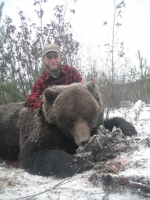
One other thing that a Bear will do while your sittin on watch waiting for him to come in, is he will make
False Lunges at the bait.... more
That's a tip I have never heard or read about before. I'll remember to look at the snout next time! Although in low light it might be difficult. Good article Troy.